
Outdoor signage has to work harder than interior lighting.
It has to attract attention after dark, hold up against weather, suit the brand, and still look clean and readable from the street. It also has to perform consistently over time. If the lighting is patchy, too harsh, poorly sealed, or simply not designed for exterior conditions, the sign starts letting the whole frontage down.
At Display Lighting, we work on projects where visibility, finish quality, and reliability all matter. Outdoor signage is one of those areas where choosing the right fitting makes a clear difference from day one. If you are lighting a shopfront sign, a fascia feature, a window display, or an external brand element, the right LED solution depends on the type of sign, the environment, and how the light needs to behave.
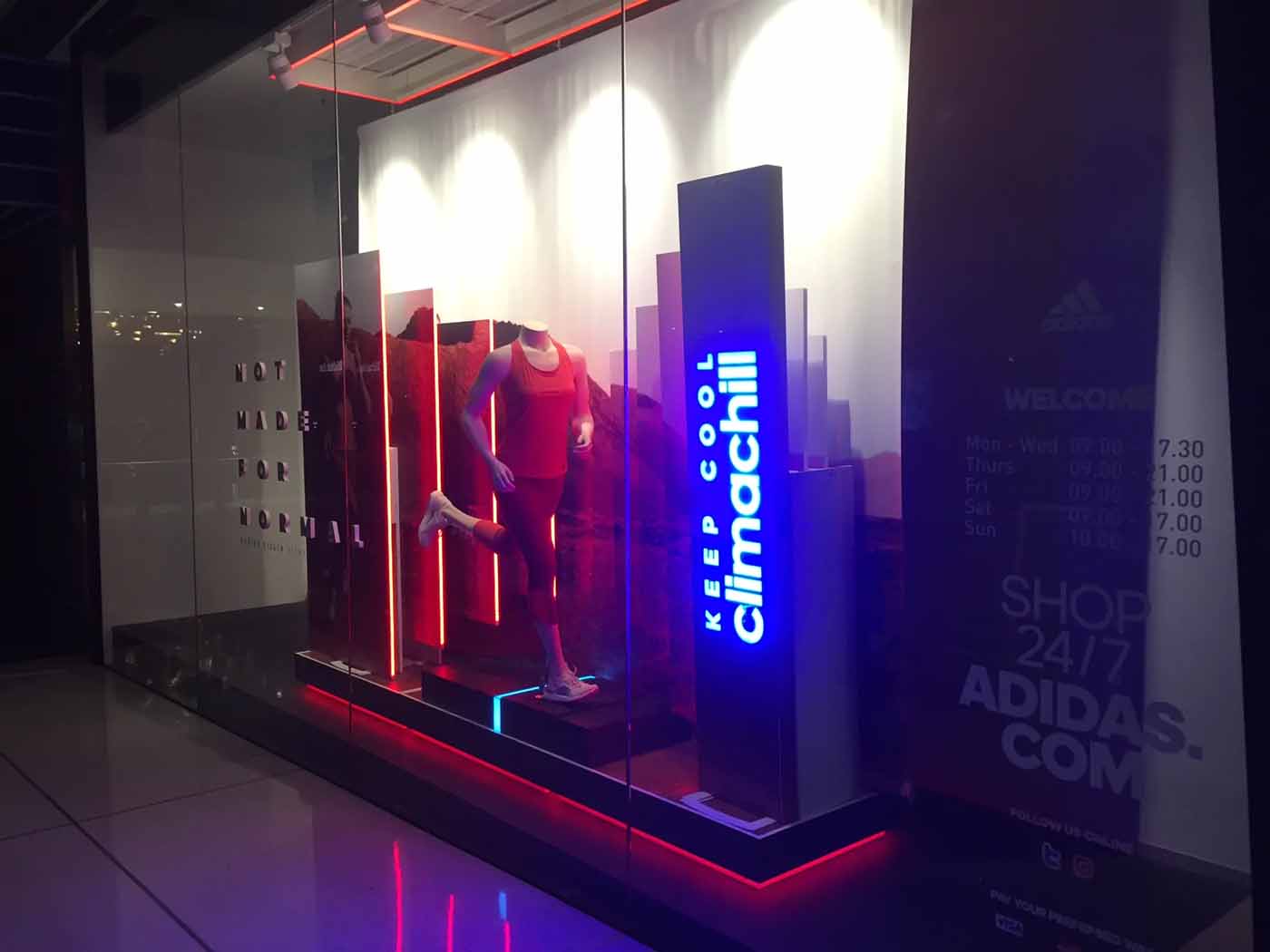
Start With The Type Of Signage
The first step is to identify what you are actually lighting.
Outdoor signage can include:
- fascia signs
- lightboxes
- channel letters
- shopfront brand features
- window signage
- architectural outlines
- illuminated display details around the entrance
Each one has different requirements. A channel letter sign needs even internal illumination. A window or exterior feature may suit a more linear edge-lighting approach. A fascia sign may need stronger spread and cleaner readability from a distance.
That is why the best choice often comes down to whether the job calls for sign modules or waterproof strip lighting.
When LED Sign Modules Are The Better Choice
For many outdoor signage applications, LED sign modules are the strongest option.
They are especially well suited to:
- lightboxes
- channel letters
- deeper sign cavities
- illuminated architectural signage
- signs that need broad, even face coverage
Modules are designed for spaced installation across the sign body, which makes them better at illuminating a larger area evenly than standard strip lighting. They also allow you to control beam spread, spacing, and brightness more effectively across the sign face.
At Display Lighting, our sign modules are designed for back-lighting channel letters, lightboxes, and general architectural lighting. They offer strong lumen-per-watt output, multiple beam angles, colour options, and suitability for both internal and external environments. They are also moisture-proof and fire retardant, which makes them a practical choice for signage exposed to outdoor conditions.
When Waterproof LED Strip Lighting Makes More Sense
There are also outdoor signage jobs where waterproof LED strip lights are the better fit.
This is usually the case when:
- the detail is linear rather than broad-face illuminated
- the lighting needs to follow an edge, reveal, or trim line
- the sign feature is shallow
- the effect is more decorative or architectural
- the project includes shopfront outlining or external display framing
In these situations, outdoor LED strip lights can work extremely well, especially when the goal is to highlight form rather than light a full sign face from within.
The key is making sure the strip is genuinely suited to exterior use and installed in a way that protects the system long term.
Weather Resistance Is Not Optional
Outdoor lighting lives in a very different environment from interior signage.
Rain, dust, temperature shifts, UV exposure, and general wear all affect long-term performance. That is why moisture resistance and installation quality need to be taken seriously from the start.
For shopfront displays and exterior sign features, the lighting should be selected not only for appearance but also for durability. A sign that looks great in the first month but starts failing at joins, losing consistency, or taking on moisture later is not a good result.
This is one reason dedicated signage products perform better than makeshift alternatives. The fitting needs to suit the environment as much as the design brief.
Bright Enough To Be Seen, Controlled Enough To Look Good
Outdoor signs need to stand out, but that does not mean blasting them with as much brightness as possible.
Too much output can make the sign look harsh, flatten brand detail, or create uneven hotspots across the face. It can also reduce legibility, especially where lettering, acrylic faces, or reflective surfaces are involved.
The goal is visibility with control.
That means thinking about:
- sign depth
- beam spread
- spacing
- face material
- viewing distance
- surrounding ambient light
For many lightboxes and channel letters, LED sign modules give you that control more effectively than strip lighting because they are made for even internal distribution rather than just linear emission.
Shopfront Displays Need Lighting That Supports The Brand
Shopfront lighting is not only about signage. It is also about the wider first impression.
External brand features, window displays, and illuminated architectural details all contribute to how a business is perceived from outside. Good outdoor lighting should help the frontage feel active, clean, and intentional.
For linear shopfront details, outdoor LED strip lights can be very effective. They are especially useful for:
- highlighting façade lines
- outlining entry features
- enhancing window display edges
- adding light beneath canopies or trims
- reinforcing brand colour in architectural details
This is where lighting starts to work as part of the broader visual identity rather than just as sign illumination.
Colour And Tone Matter Outdoors Too
Outdoor signage still needs the right tone.
A sign can be technically bright enough and still feel wrong if the colour is off, the white is too harsh, or the lighting does not suit the brand. Hospitality and boutique brands may suit a softer, warmer external effect, while sharper retail or service businesses may benefit from a cleaner white.
For modular signage lighting, colour choice also needs to work with the face material and branding. The lighting should support the sign, not distort it.
If you are also weighing up how colour influences broader display and commercial presentation, our blog on How To Choose the Right Colour Temperature for Retail, Office, and Display Lighting is a helpful companion read.
Power Planning Still Matters Outside
Outdoor signage is only as dependable as the power setup behind it.
The correct LED power supplies and control systems help ensure the fittings receive stable voltage and perform consistently over time. This matters for modules, strips, and any external lighting feature expected to run for long periods.
Power planning becomes especially important where:
- multiple signs or features are connected
- the installation spans longer runs
- brightness consistency matters across the frontage
- future control or maintenance access needs to be considered
In short, outdoor signs should be planned as systems, not just as fittings.
The Right Outdoor Signage Lighting Depends On The Job
A simple way to frame the decision is:
- Choose sign modules for lightboxes, channel letters, and broader illuminated sign faces
- Choose waterproof strip lighting for linear external details, outlines, and decorative shopfront features
- Choose based on durability, not just brightness
- Match the fitting to the environment, sign depth, and viewing distance
- Plan the driver and layout early so the system performs properly long term
Our blog on How to Choose the Best Affordable LED Module Lights for Your Needs is a useful next read.
Better Shopfront Visibility Starts With Better Product Choice
Outdoor signage and shopfront lighting need to do more than survive outside. They need to strengthen the frontage, support the brand, and hold up visually every night.
At Display Lighting, we supply LED sign modules, waterproof LED strip lights, outdoor LED strip lights, and LED power supplies and control systems for projects that need reliable, high-quality exterior lighting solutions.
If you want your shopfront to look sharper, more visible, and more professionally resolved after dark, choosing the right LED lighting from the start is one of the smartest moves you can make.
