
When buying LED strip lighting, voltage is one of the most important decisions you will make. It directly affects performance, installation flexibility, brightness consistency, and long-term reliability. Yet it is also one of the most misunderstood aspects of LED lighting, especially for homeowners and businesses comparing 12V and 24V systems.
This guide explains the difference between 12V and 24V LED strip lighting, when to use each, and how choosing the right voltage can help you get the best results from your installation. This was written to help you buy with confidence and to guide you towards the right products within Display Lighting’s LED strip lighting range.
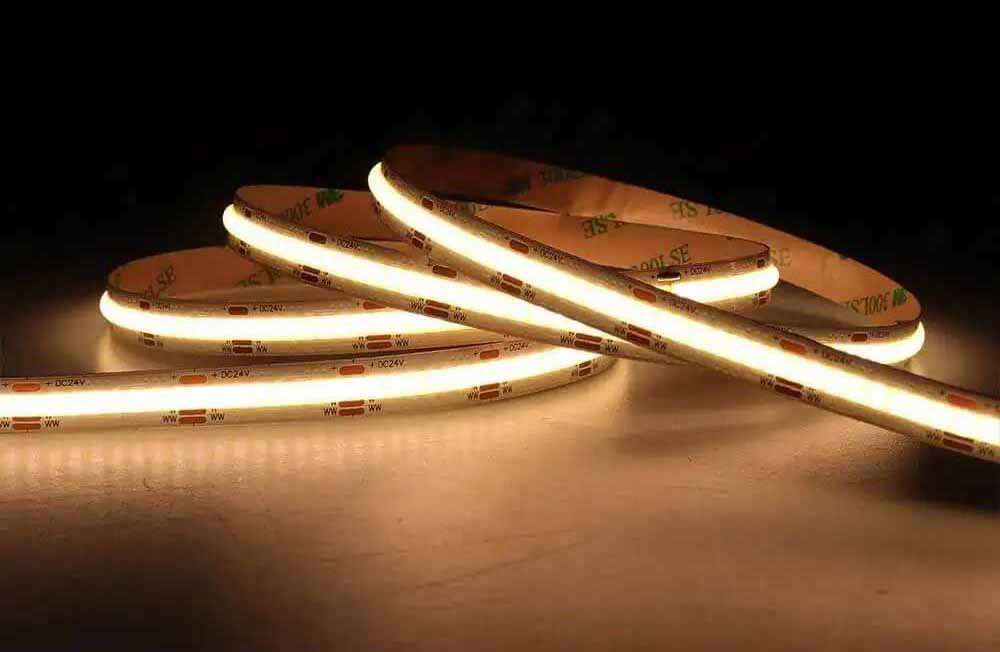
Why LED Strip Voltage Matters
LED strip lights operate on low voltage DC power, typically either 12 volts or 24 volts. This low voltage makes them safer and more flexible than traditional lighting, but it also means voltage drop becomes a key factor.
Voltage drop occurs when electricity loses strength as it travels along the strip. If voltage drop is not managed correctly, it can lead to uneven brightness, colour inconsistency, and reduced lifespan.
Choosing the correct voltage is about balancing strip length, brightness, installation layout, and LED power supply selection.
Understanding 12V LED Strip Lighting
12V LED strip lighting has been the industry standard for many years and is still widely used.
Key characteristics of 12V LED strips
- Best suited to shorter runs
- Common in residential applications
- Wide availability of accessories and controls
- Ideal for compact spaces and cabinetry
Because 12V strips operate at a lower voltage, they draw more current to achieve the same power output as 24V strips. This means voltage drop occurs more quickly over distance.
In practical terms, 12V LED strips are best used for runs of up to 5 metres, unless power is injected at multiple points.
When 12V LED strip lighting makes sense
- Under-cabinet kitchen lighting
- Bathroom vanities and mirrors
- Small shelving or display niches
- Short decorative runs
- Projects with tight spaces or lower wattage requirements
You will find many suitable options in Display Lighting’s LED strip lighting range, including warm white, cool white, RGB, and waterproof variants designed for controlled installations.
Understanding 24V LED Strip Lighting
24V LED strip lighting has become increasingly popular, particularly for commercial and architectural projects.
Key characteristics of 24V LED strips
- Better performance over longer distances
- Reduced voltage drop
- Higher efficiency in many applications
- Cleaner, more consistent brightness
Because 24V strips carry the same power using less current, voltage drop is significantly reduced. This allows longer continuous runs without brightness loss.
In many cases, 24V strips can run up to 10 metres from a single feed point, depending on wattage and installation method.
When 24V LED strip lighting is the better choice
- Commercial fitouts
- Retail shelving and displays
- Long linear runs
- Architectural lighting features
- Projects where uniform brightness is critical
24V systems are commonly paired with aluminium LED profiles, which further improve heat dissipation and performance while delivering a clean architectural finish.
12V vs 24V: Side-by-Side Comparison
|
Feature |
12V LED Strips |
24V LED Strips |
|
Best run length |
Short runs |
Longer runs |
|
Voltage drop |
Occurs sooner |
Reduced |
|
Common use |
Residential |
Commercial and architectural |
|
Power efficiency |
Lower |
Higher |
|
Installation flexibility |
Good for small spaces |
Better for long layouts |
Both options are reliable when installed correctly. The right choice depends on layout, length, and performance expectations.
Power Supplies and Voltage Selection
Voltage choice must always align with the LED power supply. A 12V strip must use a 12V driver, and a 24V strip must use a 24V driver. Mixing voltages will damage the strip.
Display Lighting supplies a full range of LED power supplies and control systems designed to match strip voltage, wattage, and control requirements. Selecting a quality driver with sufficient headroom is essential for stable output and long lifespan.
As a general rule, drivers should operate at no more than 80% of their rated capacity. This reduces heat build-up and improves reliability.
Installation Tips to Reduce Voltage Drop
Regardless of voltage, correct installation makes a major difference.
Best practices include:
- Keeping strip runs within recommended lengths
- Feeding power from both ends on longer runs
- Using thicker gauge wiring for longer distances
- Installing strips into aluminium LED profiles
- Avoiding daisy-chaining excessive lengths
For high-output or commercial installations, rigid LED light bars may also be worth considering as they naturally manage voltage and heat more effectively.
Choosing the Right Voltage for Your Project
If you are deciding between 12V and 24V LED strip lighting, ask these questions:
- How long is the run?
- Is brightness consistency critical?
- Is this a residential or commercial project?
- Will the strip be installed in aluminium profiles?
- What power supplies and controls are required?
For small residential jobs, 12V remains a solid choice. For longer, cleaner, more professional results, 24V often delivers better performance with fewer complications.
Why Buy LED Strip Lighting from Display Lighting
Display Lighting specialises in high quality LED systems designed for NZ conditions. Our range includes:
- LED strip lighting in 12V and 24V options
- Aluminium LED profiles for heat management and finish
- LED power supplies and control systems matched to strip requirements
- LED light bars for display and commercial use
If you are planning a new installation or upgrading an existing one, explore our LED strip lighting collection and speak with our specialists for tailored advice that removes the guesswork.
